HVLS Fans for Agriculture
Healthier livestock. Better yields. Lower energy costs.
ForDairy BarnsPoultry HousesHorse StablesGreenhousesGrain Storage
The Original HVLS Application
HVLS fans were first developed for agriculture, where steady air circulation measurably improves livestock health, production yields and crop storage. Canagale GALE Series fans continue that tradition, delivering powerful, quiet, energy-efficient airflow built for Canadian farm conditions.
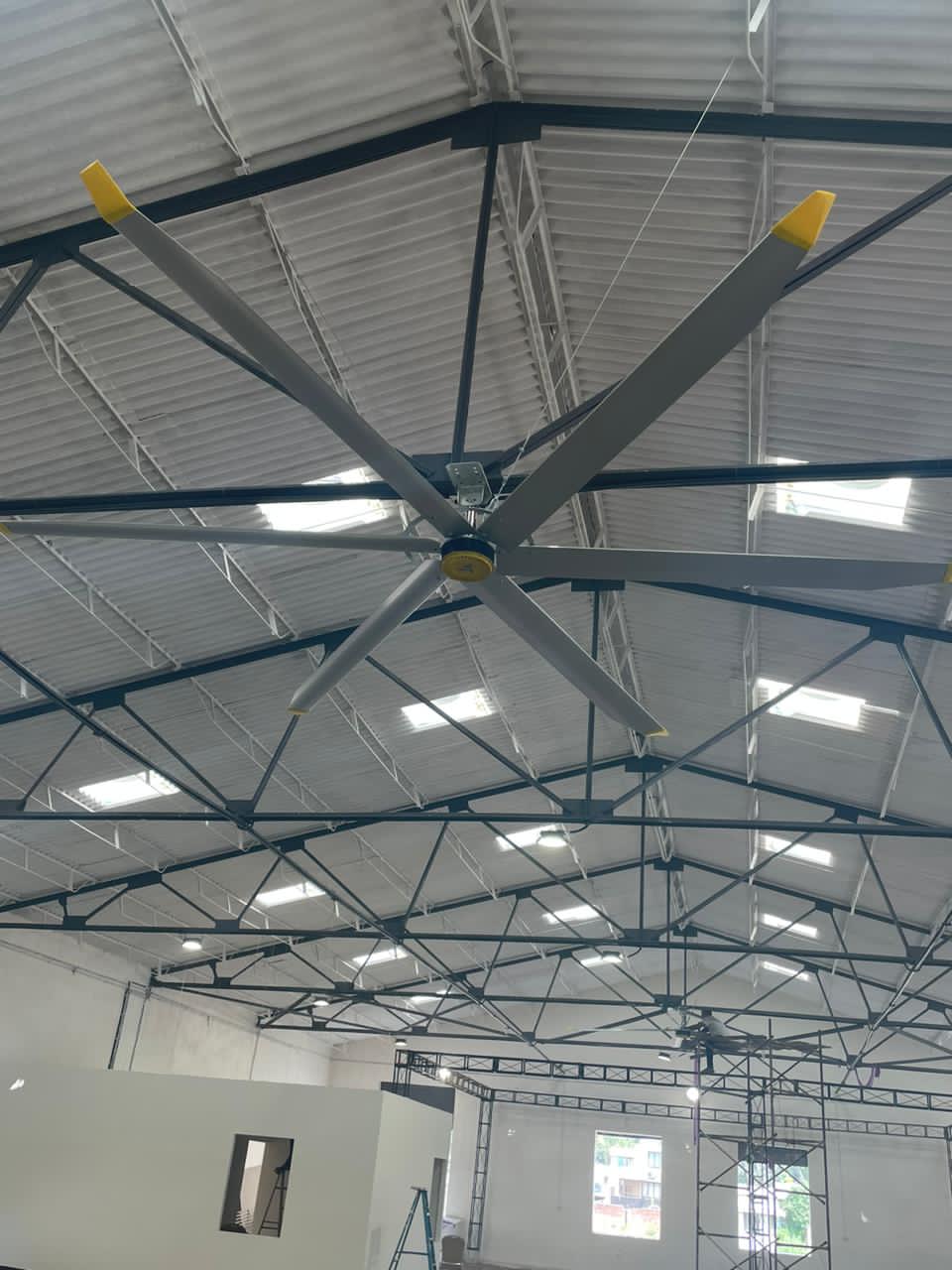
Healthier Livestock
GALE Series fans reduce heat stress, control humidity and improve milk production in dairy barns. Heat stress begins when the Temperature-Humidity Index (THI) passes 67, and steady airflow lowers the effective THI your herd feels. The same airflow keeps horses comfortable in stables year-round and clears pathogens from poultry houses, reducing disease risk and improving flock health.
Protect Your Harvest
Proper ventilation in grain and produce storage prevents humidity buildup, mould growth and spoilage. GALE Series fans move large volumes of air slowly and evenly, protecting your stored product without harsh drafts that can damage delicate crops.
Reduce Your Farm's Energy Costs
GALE Series fans draw 0.5kW–1.8kW, running for cents per day. Reduce cooling costs by 25–49% and heating costs by 20–30% compared to traditional HVAC-only approaches. Those savings run across the 10–15 year product lifetime.
Ontario farms can get up to $4,820 per fan through Save on Energy.
See farm incentives25–49%
Cooling cost reduction
20–30%
Heating cost reduction
0.5–1.8kW
Power draw
Recommended GALE Series Models for Agriculture
Agriculture HVLS Fan FAQs
Yes. Continuous low-speed airflow lowers the effective temperature animals feel and moves humid air away from them, which helps maintain feed intake and milk production while improving overall comfort.
Yes. GALE Series fans run slowly and quietly (≤38 dB) and move air evenly across the space, up to 21,500 sq ft per fan, without the strong, turbulent drafts of high-speed fans.
Yes. Even airflow removes heat, moisture and ammonia buildup, helping reduce disease risk and support flock health.
Yes. Slow, even air movement reduces the humidity buildup that leads to mould and spoilage, without harsh drafts that can damage delicate crops.
It depends on the barn's floor area and ceiling height. Smaller GALE Series models (8–14 ft) suit compact barns and stalls, while larger fans (20–24 ft) cover open dairy and livestock barns up to 21,500 sq ft. Share your dimensions and we'll recommend the right model.
Yes. GALE Series fans run at ≤38 dB and move air slowly and steadily, so they keep barns comfortable without the loud, startling drafts of high-speed fans. That is better for animal welfare and stress levels.
Heat stress begins when the Temperature-Humidity Index (THI) passes 67, which can happen at temperatures as low as 20°C (68°F) when humidity is high. Southern Ontario experiences 15 to 35 ambient heat-stress days per year, but heat rapidly accumulates inside enclosed barns due to body heat and moisture. Continuous HVLS airflow lowers the effective temperature cows feel by 3°C to 5°C, maintaining feed intake and milk yield through warm periods.
In hot years, the milk output a herd keeps through the heat can cover the cost of the fans within a year, before counting the 25–49% cooling energy savings. GALE Series fans then keep working for a 10–15 year product lifetime.
It depends on ceiling height and floor area. The G-7.3, G-6.1D and G-5.0 are common choices for agricultural buildings. Contact us for a recommendation tailored to your space.